From 3D Rendering to Built Reality
How accurately can architectural visualisation anticipate a completed building?
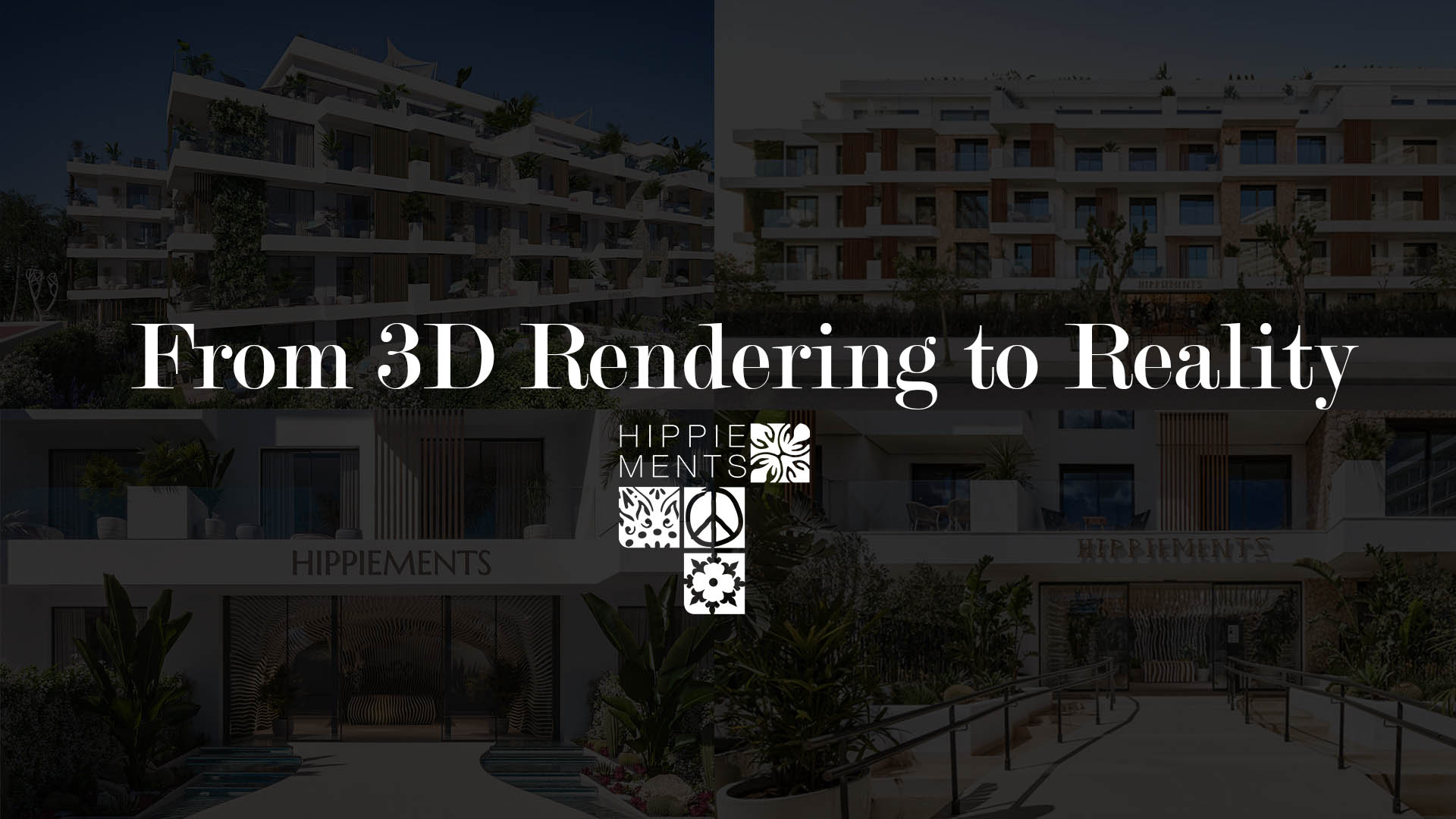
This is a question often asked by architects, developers and investors long before construction begins. During the early planning stages of a project, high-quality renderings help communicate architectural intent, materials and spatial atmosphere clearly — even before the building exists.
The real value of architectural visualisation, however, becomes visible only after the project has been completed.
Only then can one truly evaluate:
How close was the rendering to the built result?
A particularly strong example of this relationship between visualisation and built reality is the residential project HIPPIEMENTS in Ibiza, where the visualisations were developed early in the design process and can now be directly compared with the completed architecture.
When visualisation becomes reality
Already during the early design stages, photorealistic architectural visualisation becomes an essential tool for analysing and refining architectural decisions.
Renderings allow precise evaluation of:
- building volumes
- façade composition
- material selection
- proportions
- spatial atmosphere
High-quality architectural visualisation therefore supports not only presentation but also decision-making throughout the planning process.
In the case of HIPPIEMENTS, the comparison between visualisation and the completed building clearly demonstrates how accurately architecture can be developed and evaluated through visualisation already in the early project stages.
Architectural visualisation is far more than presentation
Photorealistic architectural visualisation is often understood primarily as a marketing tool.
In reality, it plays a crucial role in:
- analysing architectural decisions
- coordinating material selections
- evaluating spatial impact
- supporting communication between planning partners
- facilitating investment decisions
When a rendering accurately reflects the final building, it becomes a reliable preview of the future architecture.
The HIPPIEMENTS project in Ibiza
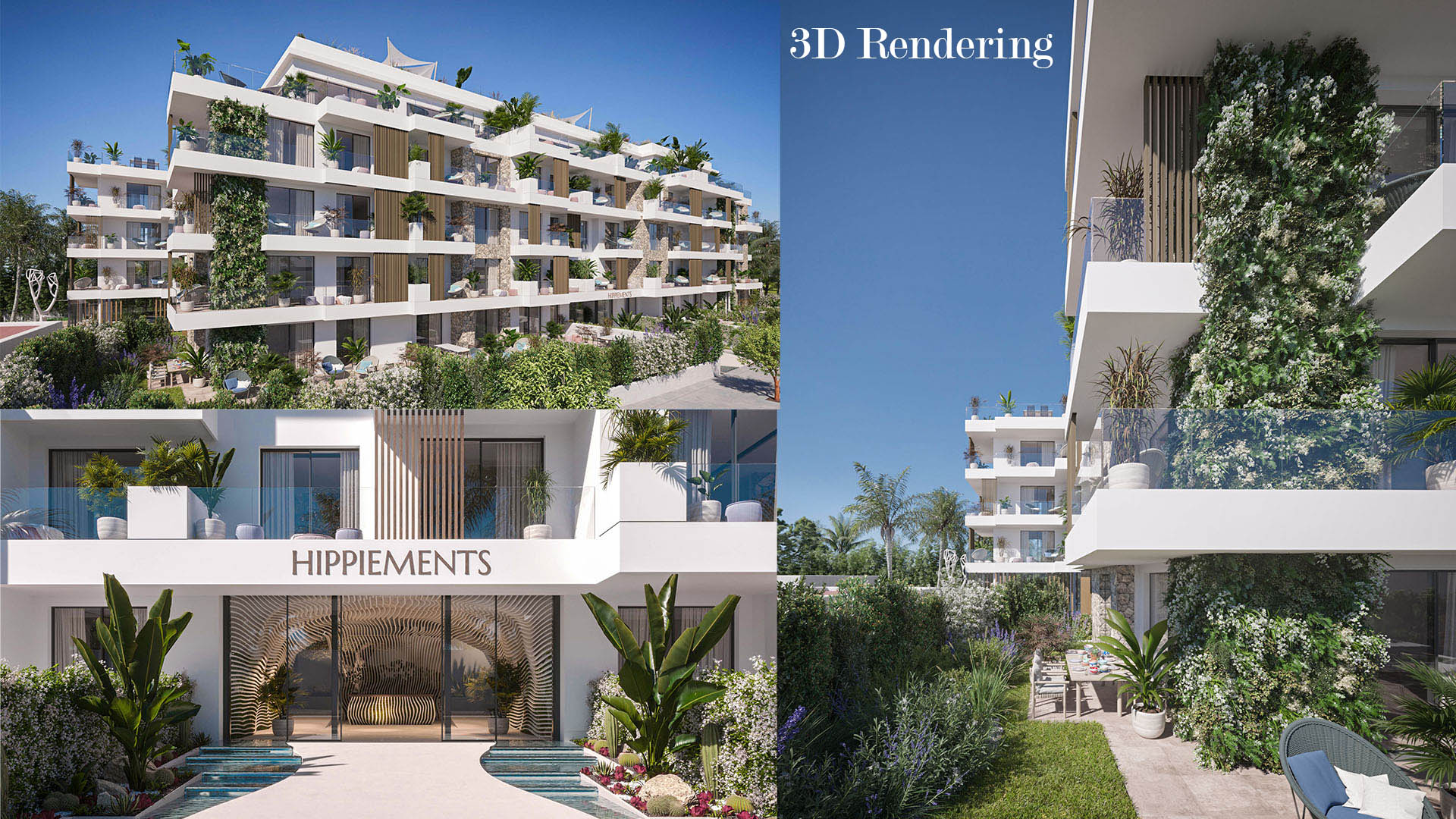
The residential project HIPPIEMENTS in Ibiza combines contemporary architecture with Mediterranean materiality and a strong relationship to its landscape context.
The architectural concept is based on:
- clean white façades
- natural stone
- timber surfaces
- vertical gardens
- seamless transitions between interior and exterior spaces
From the early stages onward, 3D visualisations were used to evaluate spatial atmosphere and material decisions with precision before construction began.
Why comparing rendering and built architecture matters
Only after completion can the accuracy of architectural visualisation truly be assessed.
Several key aspects determine the quality of this comparison.
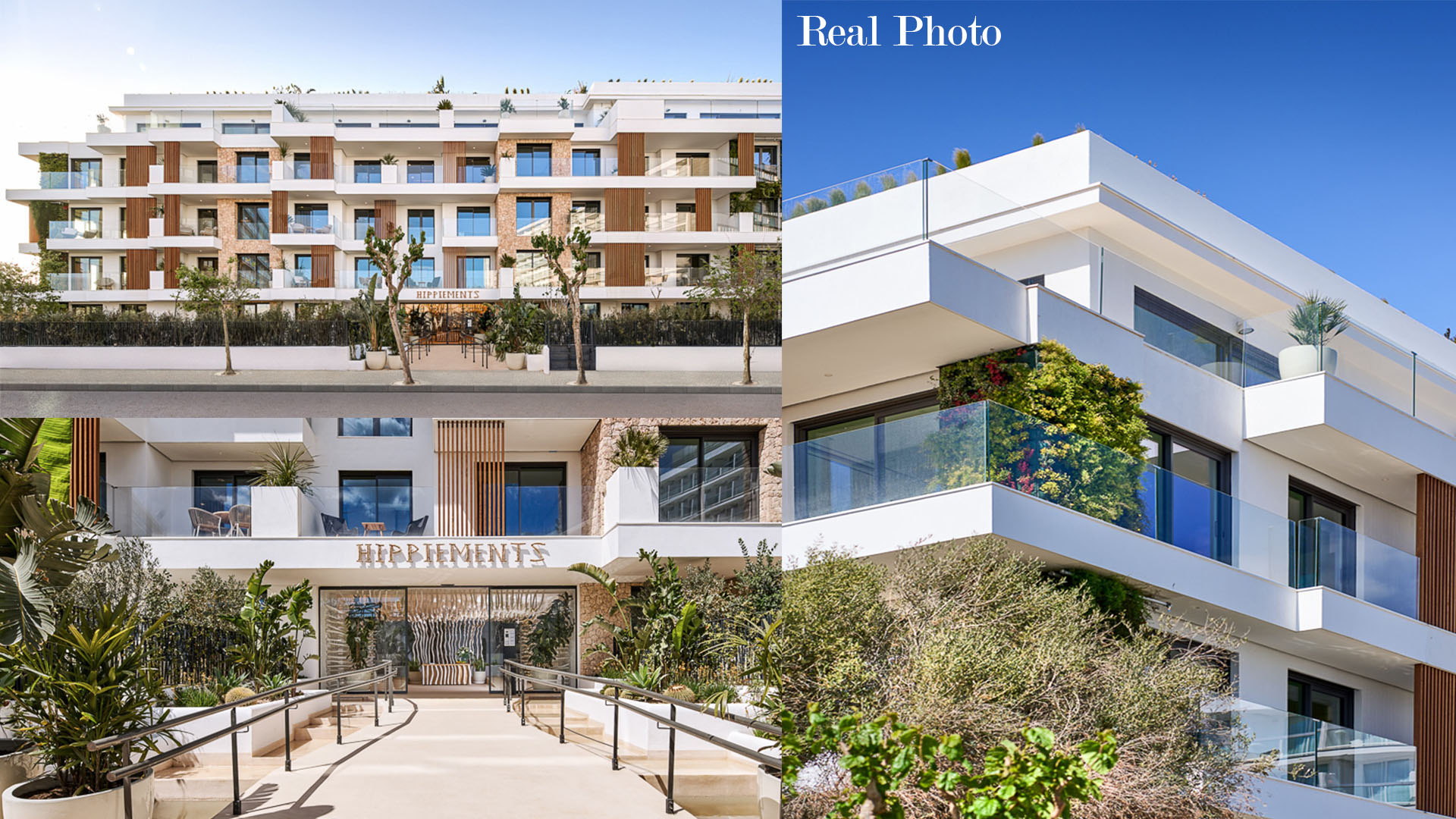
1. Architectural form and proportions
A precise visualisation must accurately represent building volumes, façade structure and proportions.
In the case of HIPPIEMENTS, the comparison confirms that the geometric clarity of the architecture was already captured with high accuracy during the visualisation phase.
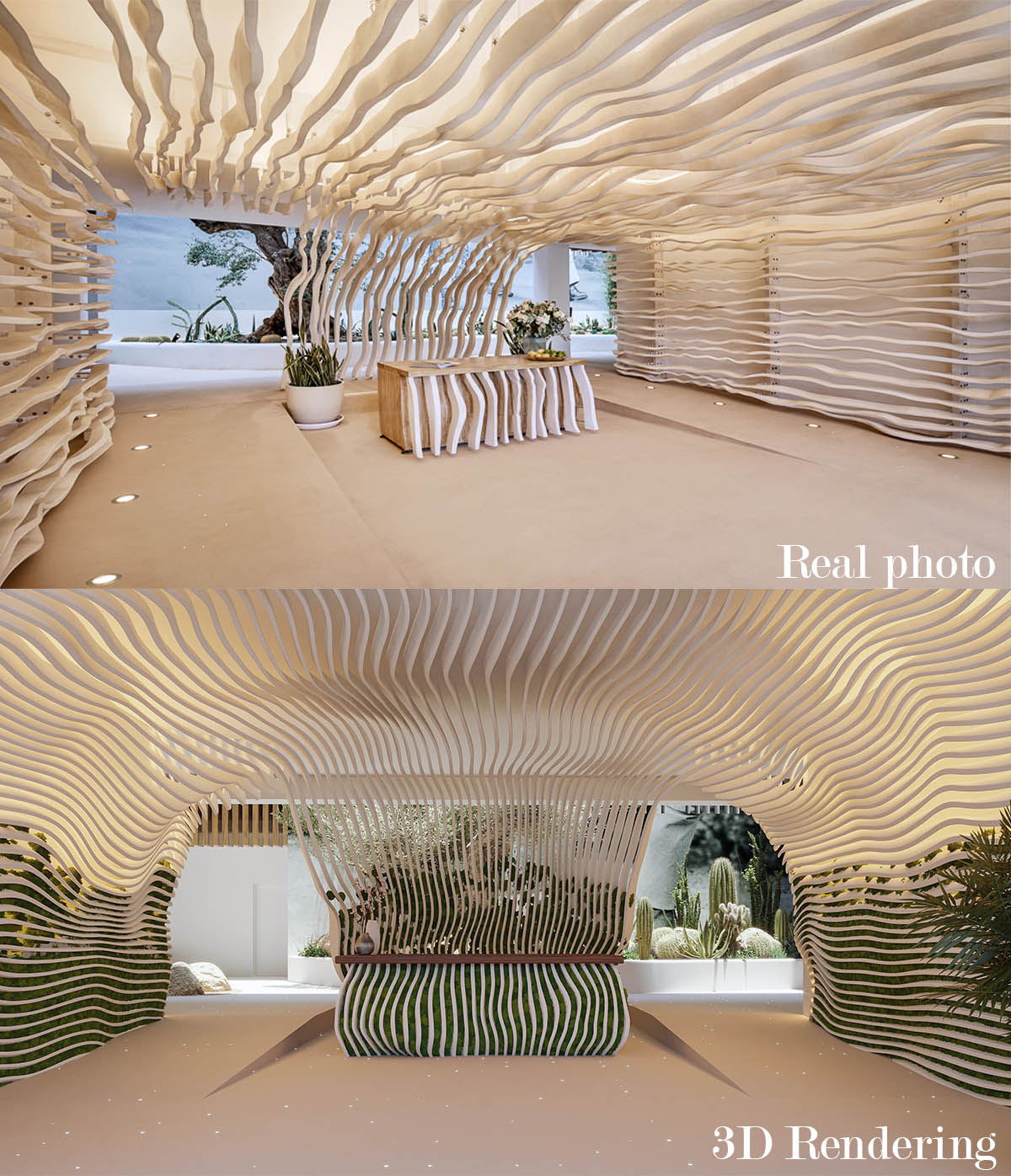
2. Materials and surfaces
Materiality strongly influences how architectural quality is perceived.
Accurate representation of:
- natural stone
- timber
- glass
- plaster finishes
is essential for a convincing visualisation.
At HIPPIEMENTS, the completed façades confirm the material decisions that had already been defined during the rendering phase.
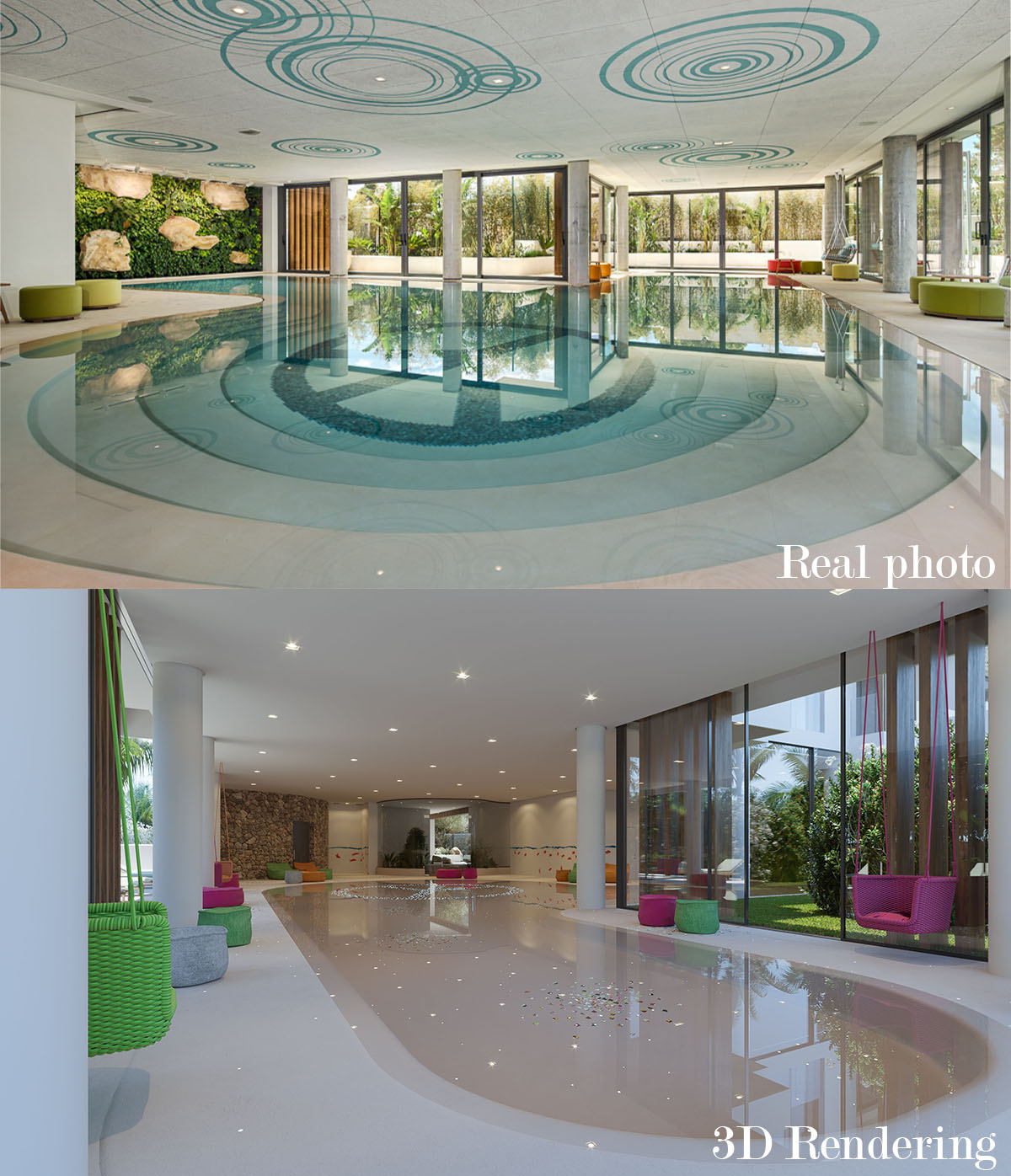
3. Light and atmosphere
Light is one of the most important elements of architectural perception.
Especially in Ibiza, Mediterranean daylight plays a decisive role in shaping spatial experience.
The accurate representation of:
- shadows
- reflections
- daylight behaviour
- spatial depth
is therefore a central component of high-quality visualisation.
The comparison with the completed building shows how precisely these aspects were already anticipated during the rendering stage.
4. The overall spatial experience
The key question is not simply:
Does the building look like the rendering?
But rather:
Does the rendering communicate the same spatial experience as the completed architecture?
For HIPPIEMENTS, the goal was to convey a clearly defined lifestyle atmosphere:
- calmness
- light
- openness
- Mediterranean character
- premium residential quality
An atmospheric architectural animation was also developed to communicate both architecture and lifestyle experience of the project.
The role of Domus Vivendi Group in the planning process
The collaboration with Domus Vivendi Group, developer and contractor of the HIPPIEMENTS project, demonstrates how architectural visualisation can become an integral part of the planning workflow.
Within their projects, renderings are not used solely for marketing purposes but support detailed evaluation of:
- architectural form
- material concepts
- interior furnishing strategies
- spatial atmosphere
- design consistency
already before construction begins.
gmsvision has been working as a trusted visualisation partner with Domus Vivendi Group for more than ten years, contributing to a number of high-end residential developments.
Conclusion
The HIPPIEMENTS project clearly demonstrates how precise architectural visualisation can anticipate the built result long before construction begins.
When visualisation becomes an integrated part of the planning process, it does not only communicate architecture — it actively contributes to improving design decisions and ensuring project quality before construction starts.
Further architectural visualisation projects can be found in our project overview.